Showing posts with label cinematography. Show all posts

Monday, January 2, 2017

Will Smith - the most powerful actor in Hollywood

Willard Carroll "Will" Smith Jr. is a widely known American actor, producer, rapper and songwriter. He was born on September 15, 1968 in Philadelphia, Pennsylvania  to Caroline, a school board administrator, and Willard Carroll Smith, Sr. who was a refrigeration engineer. He was raised baptist. Smith attended Overbrook High School. What is interesting, he could have studied at Massachusetts Institute of Technology but he said he never wanted to apply to college because he "wanted to rap". 

19th Annual Hollywood Film Awards - Arrivals


Smith started his recording career as The Fresh Prince in the hip hop band DJ Jazzy Jeff & The Fresh Prince. They performed humorous songs and became very famous. They released 3 albums with hits like "Parents Just Don't Understand",  "Rock the House" or "Girls Ain't Nothing But Troubles". In 1998 the group won the first Grammy awarded in the Rap category. 


What could go wrong? - you may ask. Well, in the years 1998-1999 Smith spent his money so freely that in 1990 he was almost a bankrupt. With some help came the NBC television network - he was to play in a sitcom "The Fresh Prince of Bel-Air". This is how his acting career started.  Will Smith set for himself the goal of becoming "the biggest movie star in the world", studying box office successes' common characteristics.


Smith didn't give up his music career, with the group he released another album with the hit "Summertime" for which they got the second in their career Grammy award. At that time many of Hollywood producers started to offer him roles in their movies. His first major roles were in the drama "Six Degrees of Separation" from 1993 and the action film "Bad Boys" from 1995. 
In 1996 Smith starred in "Independence Day" - a massive blockbuster becoming the second highest-grossing film in history at the time and bringing a huge popularity to the actor. 


In his acting career he starred in more than 20 movies, he was also a producer of many of them. One of the best are: "The Pursuit of Happyness","Ali", "I Am Legend" and "Seven Pounds", which is my favorite. Personally, I consider will Smith as a great actor because of his acting skills, his sensitivity in playing and the perfect choose of the films he plays in - in my opinion he plays only in those ones that he knows that will be good.
Smith has been nominated for five Golden Globe Wards and two Academy Awards and honestly... I don't know why he doesn't have an Oscar yet!


In April 2007 "Newsweek" called him "the most powerful actor in Hollywood". He is the only actor to have eight consecutive films gross over $100 million in the domestic box office, eleven consecutive films gross over $150 million internationally, and eight consecutive films in which he starred open at the number one spot in the domestic box office tally. He has been ranked as the most bankable star worldwide by "Forbes"As of 2016, his films have grossed $7.5 billion at the global box office. Even president Obama admitted that a biographical movie about him was ever made, he would like Will Smith to play his role. He also spoke to Smith about the possibility of making a movie about the election of 2008. 


It may not be a surprise, but Will Smith is my favorite actor. I watch all of his movies and they never dissappointed me. If you are also interested, his newest one, "Collateral Beauty" is now in cinemas. :)

Task: Think about your favorite actor/actress and write a letter to a friend in which you will describe that person. 

Friday, December 30, 2016

Assassinations Of African-American Activists

Assassinations Of African-American Activists

United States of America is a country which „unity” never was and still is not an easy and straightforward matter. Even our first associations with this country are mainly about varied society in different states. This is obviously connected with different origins of Americans which are most visible because of the skin colors. The constant fight between white and black people stems from an early stage of development of the USA and propagation of slavery.
However, the fight for blacks’ rights started to be really violent in the 50s and 60s so in the times of Malcolm X and Martin Luther King. The African-American civil rights movement became a serious threat for Parliament. Race problem is so significant that whenever it is mentioned on the greatest scale - someone gets killed. It is not only in case of ordinary people but also politicians from the highest position. What is more, it is not limited to this period, when we notice that also Abraham Lincoln was shot because of his actions on abolishing the slavery. People always are silenced by an assassin and get shot. It is both really tragic and ironic how the issue is dealt with since shooting away anyone who causes problems seems to be in the range of possibilities. However the case of Malcolm Little, or Malcolm X as he preferred to be called, was of the highest significance because his death was more or less caused by his comment on John Fitzgerald Kennedy, the US president’s  assassination. 

Znalezione obrazy dla zapytania malcolm x
Spike Lee’s film titled “Malcolm X” is a really detailed biography of Malcolm. It contains all of the most important events, and we see all different changes of values he undergoes. It ends with a really dramatic scene of his death. The one held responsible for the attack in the ballroom was Thomas Hagan, whose real name was Talmadge Hayer. He hit Malcolm 7 times using a shotgun. The film was based on Malcolm’s autobiography so it is based on the most believable source. For obvious reasons he had not wrote about his death but predicted it since several times before someone threatened him and once, shortly before his death at a rally of his followers in a ballroom in Washington Heights, someone attacked his home. He felt that people who wanted him dead were from Black Muslims Organization, which he left shortly before. They fell apart mainly because of his comment on the assassination of President Kennedy. He called it a case of ``chickens coming home to roost'' and an outgrowth of violence that whites had used against Negroes. He was suspended by Elijah Muhammad and then started his own movement but still remained loyal to his beliefs which were more than critical towards white people. It is really difficult to judge him based on Spike Lee’s adaptation. His character is really complex. However it is quite hard not to notice the irony between him and JFK. Malcolm X died from black man hands. In the end viewers get the impression that somehow his hatred and arrogance was punished.
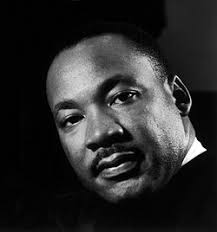
Znalezione obrazy dla zapytania martin luther king

On the other hand, Martin Luther King’s beliefs and actions were totally different. His life was portrayed in a quite recent movie “Selma” directed by Avay DuVernay. In this movie we get a totally different type of activist – the passive resistance type. The impression we get of King is that he was the one who really inspired all African-Americans to unite and march from Selma to protest against oppression. When it comes to his death it is not presented, but only mentioned about at the end. King was shot in a more private occasion, while he was in a Lorraine Motel in Memphis with his associates. The assassin used a sniper rifle and because of that he was hard to capture at first. Really interesting thing is that the police arrived at the crime scene without being called for. He murderer was caught later on – it was James Earl Ray. Just like Malcom, King received numerous threats against his life. His situation was, however, quite different since his attitude was far less aggressive, he even was able to recruit white people who openly helped his cause. Unfortunately, they were killed too, like for example Viola Luizzo who was eliminated by Ku Klux Klan. The number of assassination attempts followed her case.
Two cases have something in common, but also differs significantly. Both Malcolm X and Martin Luther King were fighting for their rights, and they both were considered to be a huge danger for the authorities. They were observed and wiretapped almost all the time. Another, not so significant, similarity would be the fact that they died at the exact same age – 39. However, their deaths had somehow different impact on the society. When Malcolm X shared his fears of being killed, he was laughed off as a publicity act. When he died people were thinking mainly about how aggressive he was. On the other hand, King became a national hero, and it is his statue that Barack Obama have on his desk. Such thing was unimaginable back in King’s times.
Many people died for the cause of freedom. From perspective of today it seems that such sacrifice was almost necessary because it really got the movements publicity it deserved in the first place. We are not able to guess how would the things go down if both Malcolm X and Martin Luther King were alive. The one thing we can obviously say – people who were responsible for the deaths of these iconic figures had lost their fight because of the killings.

1. Write an essay:
Compare situation of black people of America then and now. Try to explain the roots of the problem and present examples of racial discrimination in the US. Try to answer the question if the situation have changed, and if yes - explain how.


BIBLIOGRAPHY:
1) "American civil rights movement". Encyclopædia Britannica. Encyclopædia Britannica Online.
Encyclopædia Britannica Inc., 2016. Web. 13 sty. 2016
<http://www.britannica.com/event/American-civil-rights-movement>.

2) Malcolm X. Dir. Spike Lee. Prod. Spike Lee. By Spike Lee and Arnold Perl. Perf. Denzel Washington, Angela Bassett, Albert Hall, and Al Freeman. Warner Bros., 1992. DVD.

3) Peter Kihss. "How Race Is Lived In America." Editorial. The New York Times 22 Feb. 1965: n. pag. Malcom X Shot to Death at Rally Here. Web.

4) ‘’Death of a desperado’’ Newsweek, March 8, 1965, Copyright @ 1965, Newsweek.Inc.
<http://europe.newsweek.com/death-desperado-malcolm-x-was-assassinated-50-years-ago-today-308253?rm=eu>

5) Selma. Dir. Avay DuVernay. Screenplay by Paul Webb. Perf. David Oyelowo and Tom Wilkinson. Celador Films, 2014. DVD.

6) Berman, Elizabeth. "The Photograph That Captured the Horror of MLK’s Assassination." TIME Magazine. Time Inc., 3 Apr. 2015. Web. 13 Jan. 2016. <http://time.com/3749091/mlk-assassination-photograph/>.

7) Caldwell, Earl. "Martin Luther King Is Slain in Memphis; A White Is Suspected; Johnson Urges Calm." The New York Times (1968): n. pag. Web.

8) "Viola Liuzzo." Encyclopedia of World Biography. 2004. Encyclopedia.com. 13 Jan. 2016 <http://www.encyclopedia.com>.

9) Bartlett, Karen. "Why Malcolm X Is Getting Written Out of History." Newsweek. N.p., 20 Feb. 2015. Web. 13 Jan. 2016. <http://europe.newsweek.com/i-worry-my-father-being-written-out-history-307941?rm=eu>.


Thursday, December 29, 2016

Westerns versus 19th-century American reality


Contrary to the popular belief, the Old West was much more peaceful than American cities are today. The real culture of violence on the frontier during the latter half of the nineteenth century sprang from the U.S. government’s policies toward the Indians. In spite of the violence, what were the biggest myths perpetuated in Westerns? What productions were the truest to form? What common elements were historically accurate?


The Western is a genre of various arts which tell stories set primarily in the later half of the 19th century in the American Old West, often centering on the life of a nomadic cowboy or gunfighter armed with a revolver and a rifle who rides a horse. Westerns often stress the harshness of the wilderness and frequently set the action in an arid, desolate landscape of deserts and mountains. Often, the vast landscape plays an important role, presenting a "...mythic vision of the plains and deserts of the American West". Specific settings include ranches, small frontier towns, saloons, railways and isolated military forts of the Wild West. Most are set in the American colonial era.


Who do we not see in westerns, although they were there in the real West? Until 1960's, black people were almost completely absent from westerns, although in history they were about one seventh of all cowboys. Hispanics another one seventh of the cowboys, were almost as invisible; the 1978 miniseries Centennial in 1978 was one of the first to give them a role as cowpunchers. We often hear complaints about how native Americans are shown in westerns, but at least they are there, and not always as villains.

But the racial blind spots have largely been corrected today. What we still do not see are events and issues of the utmost importance to the actual people of the West. Labor unions in the gold mines of Virginia City, Nevada and Coeur d'Alene, Idaho; the fight over free silver, the Grange and the Populists. Republican and Democratic party politics and presidential elections are never shown; sometimes an election on statehood is shown, but with the party politics left out. Farm co-ops and their struggle with the railroads are hardly ever seen.

An example: in the early 1900s, Glacier National Park, home of the Blackfeet people, was advertised to Eastern tourists as one of the last places you could see the American Indians, who most whites thought would all be gone soon. Thousands of tourists came and saw scenes like this:


White people who had never seen a Native American before saw these folks, and made movies with "Indians" who looked like this.  And so every Native American in every western, from the Yaqui to the Apache to the Kiowa to the Oglala, ended up looking like the Blackfeet of Glacier National Park.  You rarely saw natives who looked or dressed like this:


The movie image is based on reality, yes, but we should definitely remember how loosely connected with the facts it actually is.

Conclusions? This barely scratches the surface of the similarities and differences between the historical Wild West and the kaleidoscopic range of movie versions of it. Hundreds of books have been written about the Wests of film and reality.  Overall, the trend has been toward a more realistic depiction of the West in movies, with the reality of racial diversity better portrayed, historical sources better consulted, and less tendency to draw superhuman characters. 

I've focused mostly on a racial aspect but there are a lot of different problems being constantly distorted if it comes to the culture and the history of the U.S.A. TASK: Make a brainstorm about the Westerns (19th c.) or any other period of the American history of your choice, think of some different aspects that are not completely faithfully reflected in, for instance, cinematography. Discuss your conclusions in groups.